Statins, Diet and Cholesterol Support: Where Linseed Fits
If you’ve been told you have high cholesterol, it’s natural to wonder whether changes to your diet and lifestyle could help.
Many people explore natural alternatives to statins to understand their options and feel more in control of heart health.
This article does not suggest that linseed, flaxseed, or any food should replace statins or prescribed cholesterol medication. Instead, it explains how diet and lifestyle may support normal cholesterol levels alongside personalised medical advice.
Statins are commonly prescribed to help manage cholesterol and reduce cardiovascular risk. If you have been prescribed statins, or advised to consider them, it’s important to speak to your GP, pharmacist or qualified health professional before making any changes.
Alongside medical advice, a balanced diet and healthy lifestyle can play an important role in supporting normal cholesterol levels.
At The Linseed Farm, we’ve been growing, milling and cold-pressing linseed for over 20 years. Grown and prepared right here on our West Sussex farm, our linseed products offer a simple, natural way to add fibre and plant-based omega-3 to your everyday diet.
Why Do People Look for Natural Alternatives to Statins?
There are many reasons someone might look into natural alternatives to statin medications.
Some people want to make dietary changes before medication is considered. Others may have been advised to improve their cholesterol through lifestyle changes. Some may already be taking statins and want to understand how food choices can support their overall heart health.
Whatever your situation, it’s important to approach the subject carefully.
Linseed and other natural foods are not substitutes for prescribed medication, which may be necessary for some.
Diet and lifestyle changes can still be a valuable part of cholesterol support.
Eating well, moving regularly and choosing more heart-conscious foods may help support healthier cholesterol levels over time.
Can You Lower Cholesterol Without Medication?
For some people, lifestyle changes may help improve cholesterol levels. For others, medication may still be recommended depending on cholesterol levels, medical history, family history and overall cardiovascular risk.
Natural ways to support healthy cholesterol levels may include:
- eating more fibre-rich foods
- reducing foods high in saturated fat
- choosing unsaturated fats where possible
- eating more fruit, vegetables and wholegrains
- being physically active
- maintaining a healthy weight
- stopping smoking
- reducing alcohol intake
- including heart-friendly foods such as milled linseed.
These changes work best when they become part of your daily routine rather than a short-term fix.
If you have already been diagnosed with high cholesterol, or if you have been advised to take medication, your GP or health professional can help you decide what is appropriate for your individual circumstances.
Where Does Linseed Fit Into a Cholesterol-Conscious Diet?
Linseed, also known as flaxseed, is a naturally nutritious seed that can be a useful addition to a balanced, heart-conscious diet.
It contains:
- fibre
- plant-based omega-3 fatty acids
- naturally occurring plant compounds
- protein
- minerals
Ground or milled linseed is often used as a simple daily addition to foods such as porridge, yoghurt, smoothies, soups and salads.
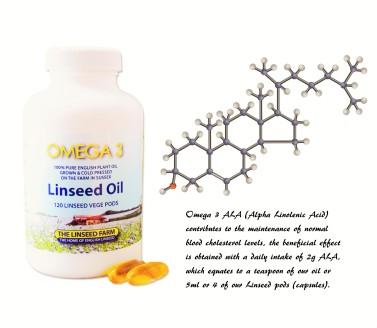
Cold-pressed linseed oil is another way to add plant-based omega-3 to your diet. Linseed oil is naturally rich in alpha-linolenic acid, known as ALA. ALA contributes to the maintenance of normal blood cholesterol levels when consumed daily as part of a balanced diet.
For a more detailed explanation of how linseed may support cholesterol, including how it works and how much people commonly take, read our guide: Does Flaxseed (Linseed) Lower Cholesterol? How It Works and How Much to Take.
Linseed Oil or Ground Linseed: Which Should You Choose?
Both cold-pressed linseed oil and ground linseed can have a place in a healthy diet, but they offer different nutritional benefits.
Ground or Milled Linseed
Ground linseed is a good choice if you want to increase your fibre intake.
Because whole linseeds can pass through the digestive system without fully breaking down, milled linseed is usually the more practical option for everyday use.
You can stir it into:
- porridge
- cereal
- yoghurt
- smoothies
- soups
- stews
- home baking
For more everyday inspiration, explore our linseed recipes and serving ideas.
Cold-Pressed Linseed Oil
Cold-pressed linseed oil [link to cold-pressed linseed oil product/category page] is naturally rich in ALA omega-3.
It can be used as a finishing oil rather than a cooking oil. Try adding it to:
- salad dressings
- smoothies
- cooked vegetables after cooking
- soups once served
- dips and spreads
At The Linseed Farm, our linseed oil is cold-pressed on the farm to help preserve its natural nutritional qualities.
Can You Use Both?
Yes, many people choose to use both ground linseed and linseed oil in different ways.
Ground linseed provides fibre, while linseed oil provides a concentrated source of plant-based omega-3.
Together, they can be easy additions to a varied, balanced diet.
Can You Take Flaxseed or Linseed With Statins?
Many people ask whether they can take flaxseed or linseed with statins.
Linseed is a food, not a medicine, and many people include it as part of a normal balanced diet.
However, if you are taking statins, blood pressure medication, blood-thinning medication, diabetes medication, or any other prescribed treatment, it’s sensible to speak to your GP, pharmacist or dietitian before making significant changes to your diet.
You should not stop taking statins, change your dose, or replace prescribed medication with linseed or any other food without medical advice.
Is Linseed a Natural Alternative to Statins?
It is safer and more accurate to think of linseed as a natural dietary support rather than a direct alternative to statins.
Statins are prescribed medicines for lowering cholesterol; linseed is a nutrient-rich food supporting a healthy diet.
For some people, dietary changes may be part of a plan to manage cholesterol. For others, diet and medication may both be recommended. The right approach depends on your cholesterol levels, medical history, family history and overall risk profile.
So, while linseed may be helpful as part of a cholesterol-conscious lifestyle, it should not be used as a substitute for medical advice or prescribed treatment.
For a fuller explanation of linseed’s role in cholesterol support, you can read our guide to how flaxseed and linseed may help support cholesterol naturally.
Supporting Cholesterol Through Diet and Lifestyle
If you are researching ways to support cholesterol through diet and lifestyle, a sensible first step is to look at your everyday habits while keeping your GP or health professional involved.
Small daily habits can add up over time.
These might include adding more fibre to breakfast, swapping heavily processed snacks for whole foods, walking more often, and choosing foods that support heart health.
Linseed is easy to include because it can be added to foods you already eat.
For example:
stir milled linseed [link to milled linseed product/category page] into porridge
- blend linseed oil [link to cold-pressed linseed oil product/category page] into a smoothie
- sprinkle ground linseed over yoghurt
- add linseed oil to a salad dressing
- mix milled linseed into homemade bread or muffins
As experts in linseed for over 20 years, we know that the simplest routines are often the easiest to maintain.
You can also explore our easy linseed recipes for practical ideas.
When Should You Speak to Your GP?
You should speak to your GP or health professional if:
- you have been diagnosed with high cholesterol
- you have been prescribed statins
- you are thinking about stopping or changing medication
- you have a family history of heart disease
- you have diabetes, high blood pressure or another long-term condition
- you are unsure what dietary changes are suitable for you
A healthy diet can be a powerful foundation, but cholesterol management is personal. Medical advice can help you make a safe and informed decision.
Explore Natural Cholesterol Support From The Linseed Farm
Linseed is a simple, natural food that can fit easily into a cholesterol-conscious diet.
Grown and prepared on our West Sussex farm, our cold-pressed linseed oil and freshly milled linseed make it easy to add plant-based nutrition to your day.
If you’re exploring natural ways to support normal cholesterol levels, you may find these helpful:
- Shop cold-pressed linseed oil
- Shop freshly milled linseed
- Read our guide: Does Flaxseed (Linseed) Lower Cholesterol? How It Works and How Much to Take.
- Explore linseed recipes and serving ideas

Durwin Banks
The Linseed Farm
FAQs About Natural Alternatives to Statins and Linseed
Are there natural alternatives to statins?
Diet and lifestyle changes can help support healthy cholesterol levels, but they should not be seen as a direct replacement for prescribed medication. If you have been prescribed statins or advised to take them, speak to your GP before making any changes.
How can you lower cholesterol without medication?
Some people may be able to improve cholesterol levels through lifestyle changes such as eating more fibre, reducing saturated fat, exercising regularly, maintaining a healthy weight and stopping smoking. However, whether medication is needed depends on your individual cardiovascular risk.
Is linseed good for cholesterol?
Linseed can be a useful part of a cholesterol-conscious diet. Ground linseed provides fibre, while linseed oil provides ALA omega-3. ALA contributes to the maintenance of normal blood cholesterol levels when consumed daily as part of a balanced diet.
Can you take flaxseed with statins?
Linseed, also known as flaxseed, is a food that many people include in a balanced diet. However, if you take statins or any prescribed medication, speak to your GP, pharmacist or dietitian before making significant dietary changes.
You should not stop taking statins or change your prescribed dose without medical advice.
Is linseed oil a replacement for statins?
No. Linseed oil is a food, not a medicine. It should not be used as a replacement for statins or any prescribed treatment. It can, however, be included as part of a balanced diet that supports normal cholesterol levels.
Which is better: linseed oil or ground linseed?
They offer different benefits. Ground linseed provides fibre, while cold-pressed linseed oil provides plant-based omega-3 ALA. Many people use both as part of a varied, balanced diet.
You can explore our cold-pressed linseed oil and freshly milled linseed to find the best option for your routine.
Please note: This article is for general information only and should not be used as a substitute for medical advice. Always speak to your GP, pharmacist or qualified health professional before stopping or changing prescribed medication, or before making significant dietary changes if you have a medical condition or take regular medication.
